In today’s rapidly evolving digital economy, large organizations are under constant pressure to innovate, scale efficiently, and stay competitive. Traditional software models—often characterized by high upfront costs, complex deployments, and limited flexibility—are no longer sufficient to meet modern business demands. This is where Enterprise SaaS (Software as a Service) solutions are making a profound impact.
Enterprise SaaS has emerged as a transformative force, enabling organizations to streamline operations, enhance collaboration, and leverage data-driven decision-making like never before. By delivering software over the cloud, SaaS eliminates many of the limitations associated with legacy systems, empowering enterprises to operate with greater agility and resilience.
This article explores how Enterprise SaaS solutions are reshaping large organizations, the key benefits they offer, and why they have become a cornerstone of modern business strategy.
What Is Enterprise SaaS?
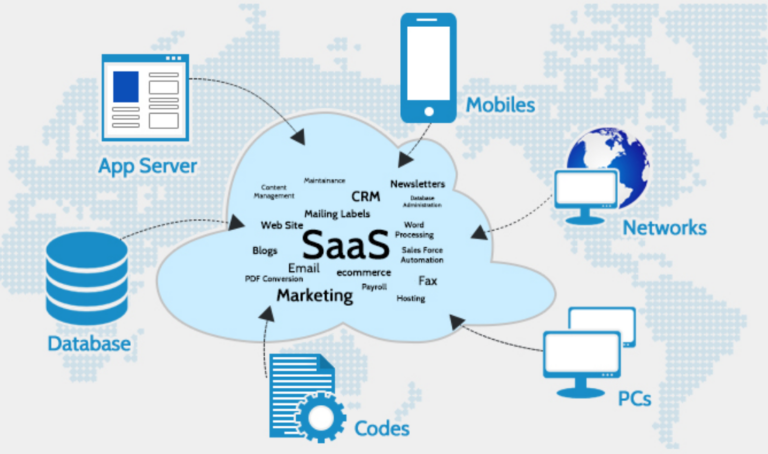
Enterprise SaaS refers to cloud-based software solutions designed specifically to meet the complex needs of large organizations. Unlike traditional on-premise software, SaaS applications are hosted on remote servers and accessed via the internet.
These solutions typically include:
- Customer Relationship Management (CRM) systems
- Enterprise Resource Planning (ERP) platforms
- Human Resource Management Systems (HRMS)
- Collaboration and productivity tools
- Data analytics and business intelligence platforms
Enterprise SaaS is built with scalability, security, and customization in mind, making it suitable for organizations with thousands of users and global operations.
The Shift from Traditional Software to SaaS
Before SaaS, enterprises relied heavily on on-premise software installations. This approach came with several challenges:
- High upfront licensing costs
- Time-consuming deployment processes
- Ongoing maintenance and upgrade burdens
- Limited scalability
Enterprise SaaS has fundamentally changed this model by introducing a subscription-based approach. Instead of purchasing software outright, organizations pay for access, allowing them to scale usage up or down as needed.
This shift has enabled businesses to move from capital expenditure (CapEx) to operational expenditure (OpEx), improving financial flexibility and reducing risk.
Key Ways Enterprise SaaS Is Transforming Large Organizations
1. Enhancing Operational Efficiency
One of the most significant impacts of Enterprise SaaS is the improvement in operational efficiency. SaaS platforms automate routine tasks, streamline workflows, and reduce manual intervention.
For example:
- Automated invoicing and billing systems
- Real-time inventory tracking
- Integrated supply chain management
By eliminating redundancies and optimizing processes, organizations can operate faster and more efficiently.
2. Enabling Scalability and Flexibility
Large organizations often experience fluctuations in demand, workforce size, and operational needs. Enterprise SaaS solutions are inherently scalable, allowing businesses to adjust resources in real time.
Key advantages include:
- Adding or removing users بسهولة
- Expanding storage and computing capacity instantly
- Supporting global operations بدون infrastructure constraints
This flexibility ensures that enterprises can grow without being limited by their IT infrastructure.
3. Improving Collaboration Across Teams
In large organizations, collaboration across departments and geographic locations can be challenging. Enterprise SaaS platforms provide centralized systems where teams can work together seamlessly.
Features that enhance collaboration include:
- Cloud-based document sharing
- Real-time communication tools
- Integrated project management systems
Employees can access the same data and tools regardless of location, leading to better coordination and faster decision-making.
4. Driving Data-Driven Decision Making
Data is one of the most valuable assets for any organization. Enterprise SaaS solutions provide powerful analytics and reporting tools that help businesses make informed decisions.
Capabilities include:
- Real-time dashboards
- Predictive analytics
- AI-driven insights
With access to accurate and up-to-date data, leaders can identify trends, forecast outcomes, and optimize strategies.
5. Reducing IT Complexity and Costs
Managing on-premise infrastructure is both expensive and complex. Enterprise SaaS eliminates the need for organizations to maintain hardware, perform software updates, or handle security patches.
Benefits include:
- Lower IT maintenance costs
- Reduced need for in-house IT staff
- Automatic updates and upgrades
This allows IT teams to focus on strategic initiatives rather than routine maintenance tasks.
6. Enhancing Security and Compliance
Security is a top priority for large organizations, especially those handling sensitive data. Enterprise SaaS providers invest heavily in advanced security measures.
These include:
- Data encryption
- Multi-factor authentication
- Regular security audits
- Compliance with global standards (e.g., GDPR, ISO certifications)
By leveraging SaaS solutions, organizations can achieve a higher level of security than many could implement on their own.
7. Accelerating Innovation
Enterprise SaaS platforms are continuously updated with new features and capabilities. This ensures that organizations always have access to the latest technology without needing to perform manual upgrades.
As a result:
- Businesses can adopt new tools بسرعة
- Innovation cycles become shorter
- Competitive advantage is maintained
SaaS enables organizations to stay ahead in a rapidly changing market.
Industry-Specific Transformations
1. Finance and Banking
Enterprise SaaS has revolutionized financial institutions by enabling:
- Real-time transaction processing
- Advanced fraud detection
- Digital banking services
Banks can now offer seamless customer experiences while maintaining high levels of security.
2. Healthcare
In healthcare, SaaS solutions have improved:
- Patient data management
- Telemedicine services
- Regulatory compliance
Healthcare providers can deliver better care while optimizing administrative processes.
3. Retail and E-commerce
Retailers benefit from SaaS through:
- Inventory management systems
- Personalized customer experiences
- Omnichannel integration
This allows businesses to respond quickly to changing consumer behavior.
4. Manufacturing
Manufacturers use SaaS to:
- Monitor production خطوط
- Optimize supply chains
- Predict maintenance needs
These capabilities lead to increased productivity and reduced downtime.
Challenges of Enterprise SaaS Adoption
While Enterprise SaaS offers numerous benefits, it is not without challenges.
1. Data Migration
Moving data from legacy systems to SaaS platforms can be complex and time-consuming. Organizations must ensure data accuracy and integrity خلال the transition.
2. Integration with Existing Systems
Large organizations often rely on multiple systems. Integrating SaaS solutions with existing التكنولوجيا can be challenging.
3. Vendor Lock-In
Relying on a single SaaS provider can create dependency, making it difficult to switch vendors لاحقًا.
4. Security Concerns
Although SaaS providers offer strong security, organizations must still ensure proper configuration and access control.
Best Practices for Successful SaaS Implementation
To maximize the benefits of Enterprise SaaS, organizations should follow these best practices:
1. Define Clear Objectives
Identify the goals you تريد تحقيقها from SaaS adoption, such as improving efficiency or reducing costs.
2. Choose the Right Vendor
Evaluate vendors based on:
- Scalability
- Security
- Customer support
- Integration capabilities
3. Plan Data Migration Carefully
Develop a detailed migration strategy to minimize disruptions and ensure data accuracy.
4. Train Employees
Ensure that employees are properly trained to use the new systems effectively.
5. Monitor Performance
Continuously track performance metrics to measure the impact of SaaS solutions and identify areas for improvement.
The Future of Enterprise SaaS
The future of Enterprise SaaS is promising, with several trends shaping its evolution:
1. Artificial Intelligence Integration
AI will play a major role in enhancing SaaS capabilities, enabling smarter automation and predictive analytics.
2. Industry-Specific SaaS Solutions
More vendors are developing tailored solutions for specific industries, addressing unique business needs.
3. Increased Focus on User Experience
SaaS platforms will continue to prioritize intuitive interfaces and seamless user experiences.
4. Expansion of Hybrid and Multi-Cloud Strategies
Organizations will adopt hybrid and multi-cloud approaches to increase flexibility and reduce dependency on a single provider.
Conclusion
Enterprise SaaS solutions are transforming large organizations by enabling greater efficiency, scalability, and innovation. By shifting from traditional software models to cloud-based platforms, businesses can reduce costs, improve collaboration, and make data-driven decisions.
Despite some challenges, the benefits of Enterprise SaaS far outweigh the drawbacks. With the right strategy and implementation approach, organizations can unlock significant value and position themselves for long-term success.
As technology continues to evolve, Enterprise SaaS will remain a critical driver of digital transformation, empowering large organizations to thrive in an increasingly competitive landscape.
Final Thoughts
The transformation brought by Enterprise SaaS is not just about التكنولوجيا—it’s about redefining how organizations operate, collaborate, and grow. Companies that embrace SaaS today are better equipped to adapt to future challenges and seize new opportunities.